Residential
Humboldt Townhouse
Joana Torres Studio in collaboration with Ula Bochinska,
Katz Architecture
Location: Brooklyn, NY
Awards & Press:
Design Award of Merit 2025,
by SARA NY (Society of American Registered Architects)
Featured in the Brownstoner:
Hub for Visiting Artists Emerges From Greenpoint Townhouse Reno
This full gut renovation integrates advanced features for high energy efficiency, such as rooftop solar panels that reduce energy consumption and a robust insulation envelope using repurposed denim insulation. A gray water reclamation system repurposes sink and shower water for toilet flushing and garden irrigation, while a gravel pool helps manage rainwater runoff in this flood-prone area.
Interior finishes highlight reclaimed and natural materials, including Tadelakt natural plaster and handmade Zellige tiles. Salvaged wooden beams were repurposed into kitchen cabinets and shelving, while the flooring consists of elm wood salvaged from old barns in upstate New York.
Blending past and present, the facade features natural unfinished cedar planks that restore the home’s 1910 character, while the rear embraces a contemporary aesthetic with expansive west-facing openings, seamlessly connecting the home to the back yard.
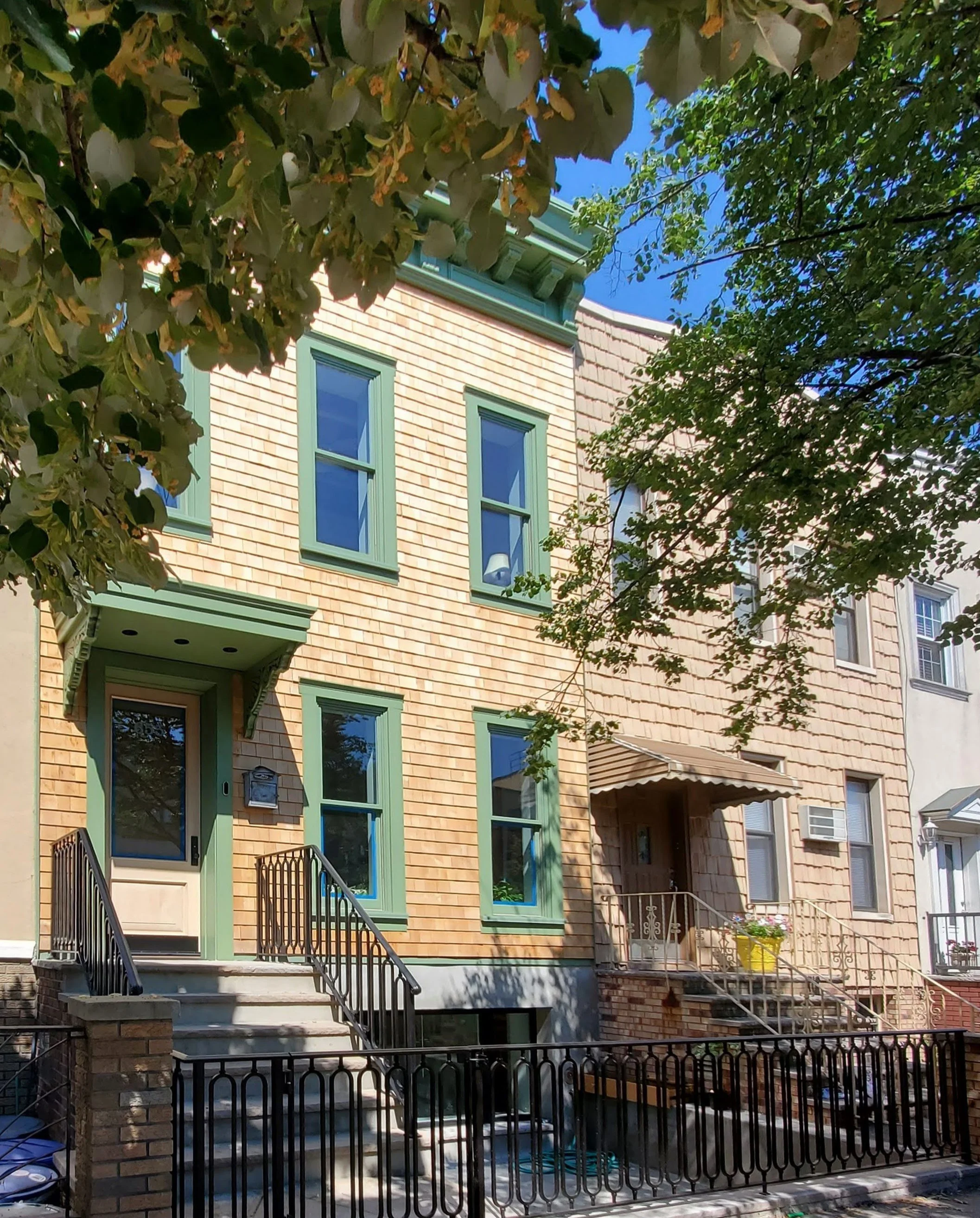
The front facade was completely redesigned, paying homage to the original early 20th-century design.
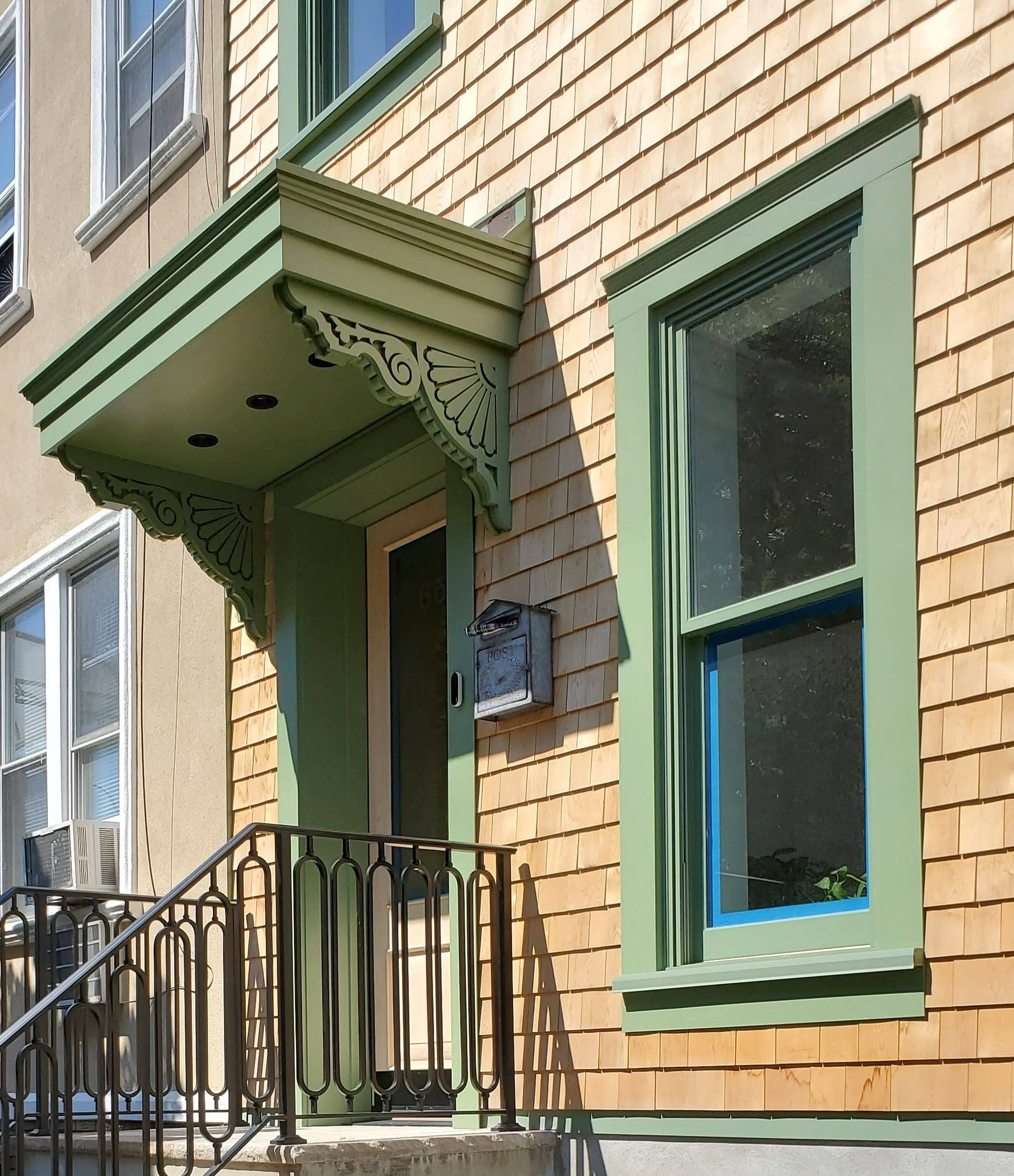
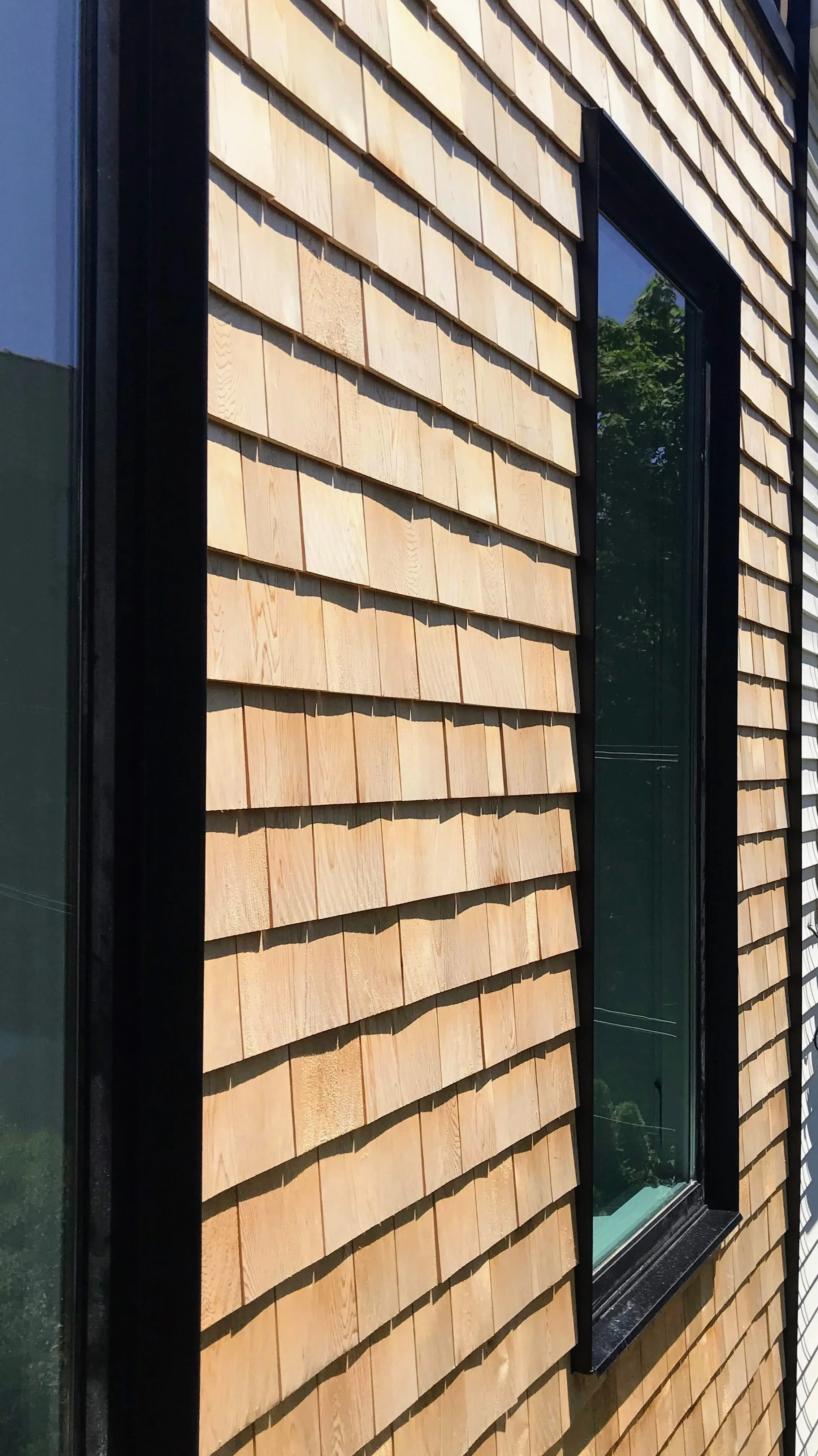
A new awning and cornice and new windows were added. Natural untreated cedar shingles were used both in the front and back facades.
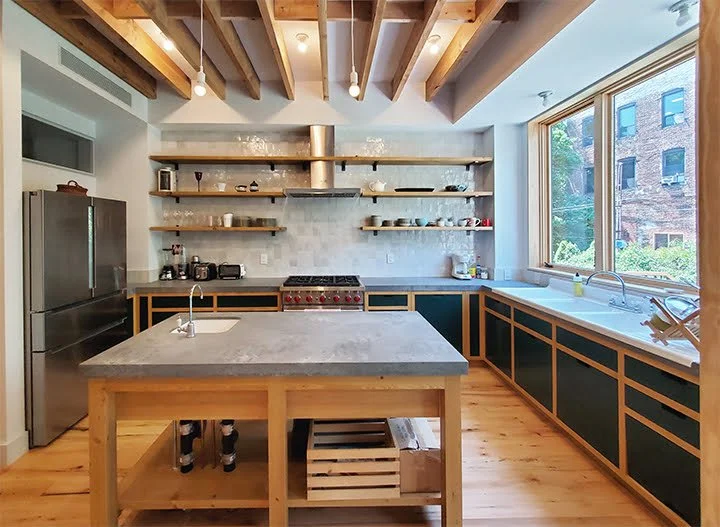
The kitchen cabinets, island, and shelves were custom-built using wood reclaimed from the original ceiling beams that required replacement.
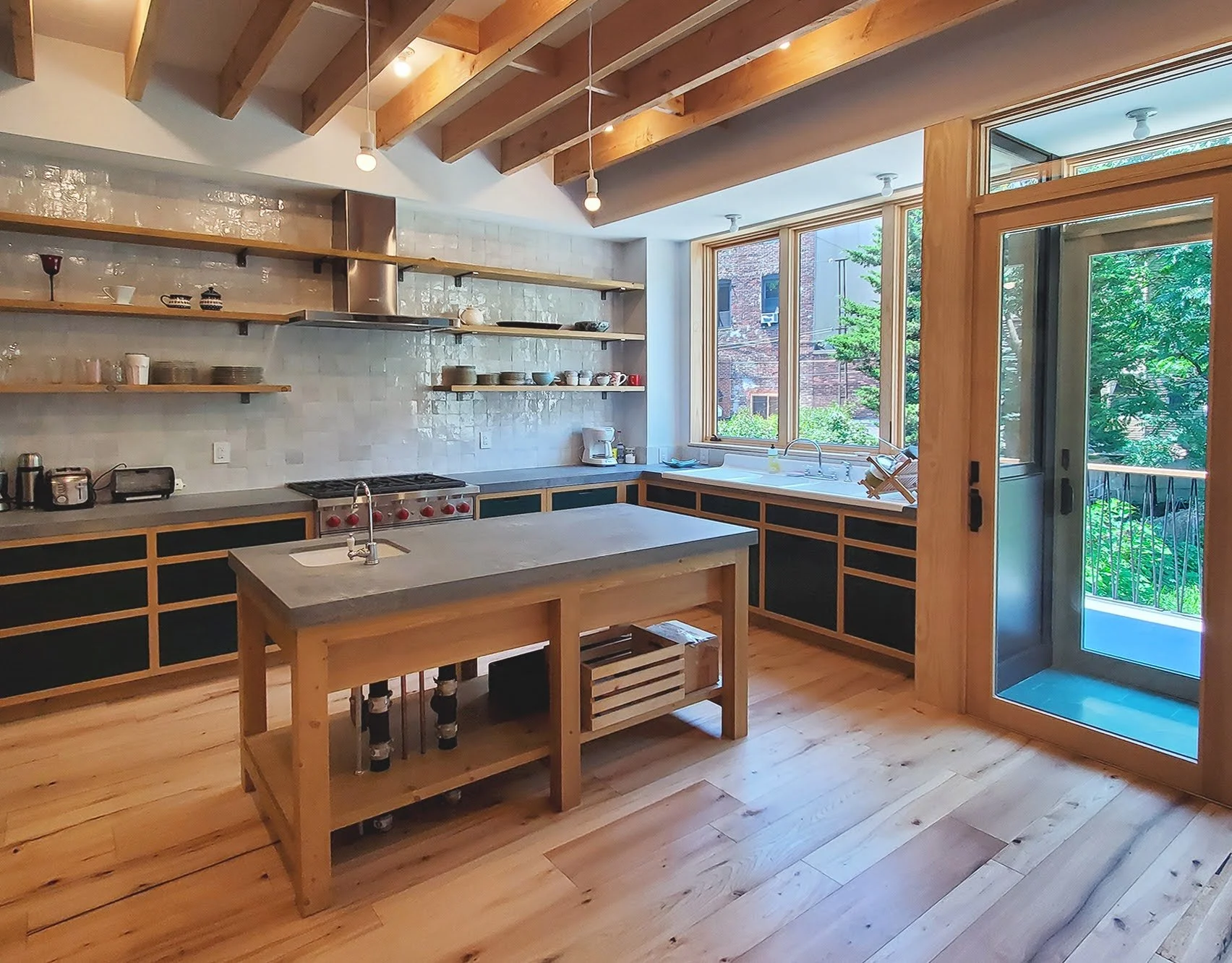
The backsplash consists of handmade terracotta tiles, known as Zellige tiles.
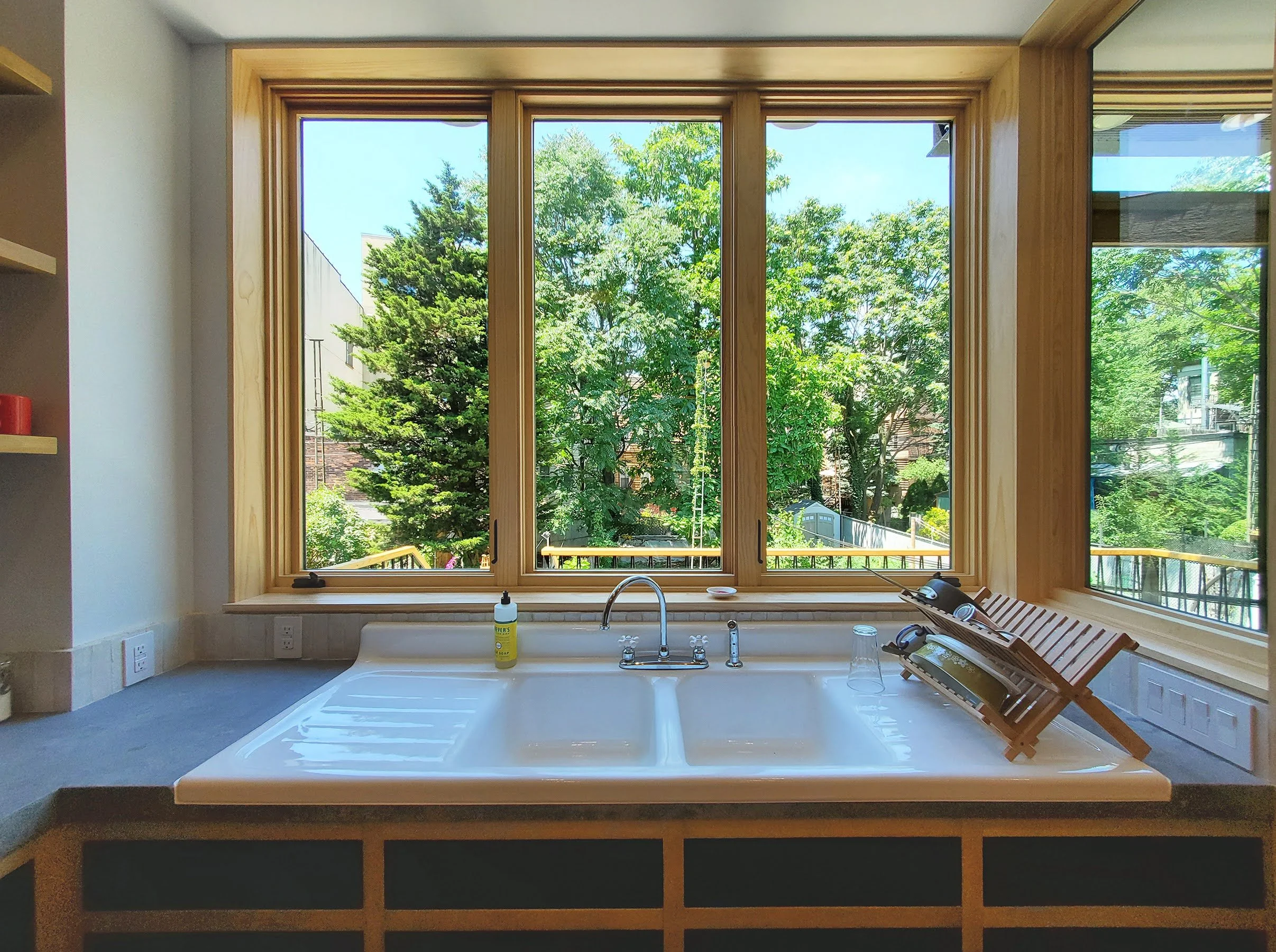
The original kitchen sink was reglazed and reused
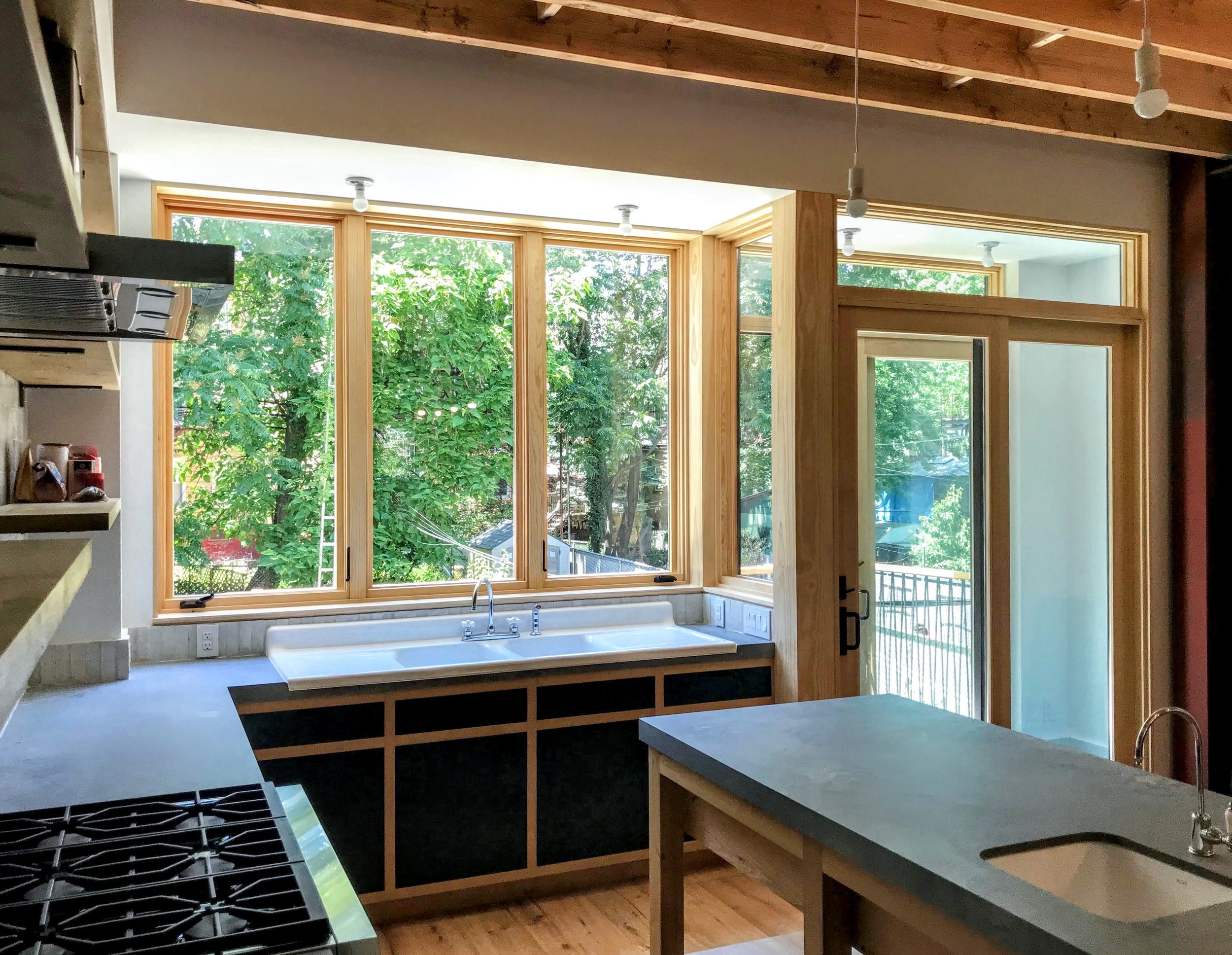
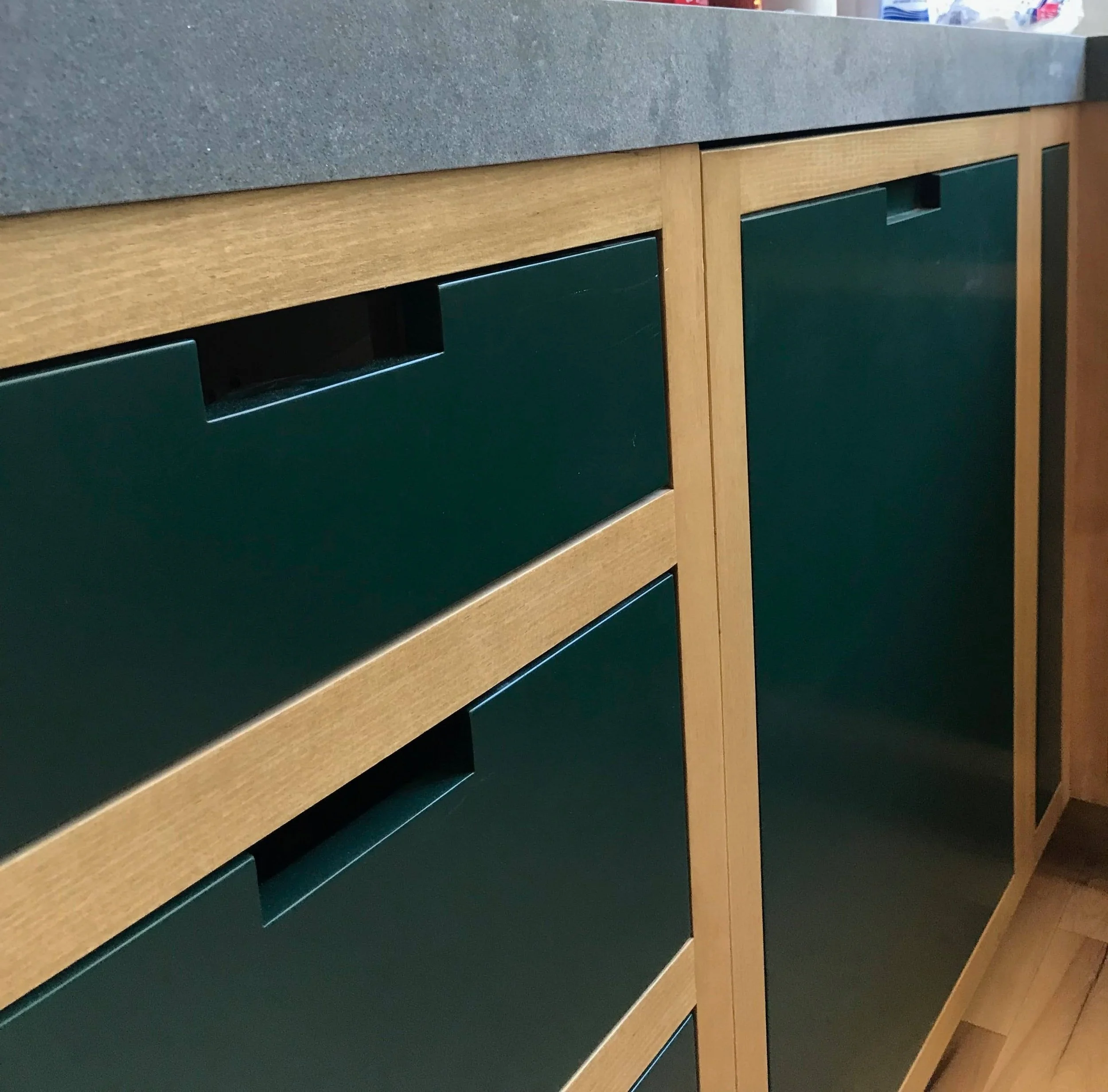
The kitchen cabinets, island, and shelves were custom-built using wood reclaimed from the original ceiling beams that required replacement.
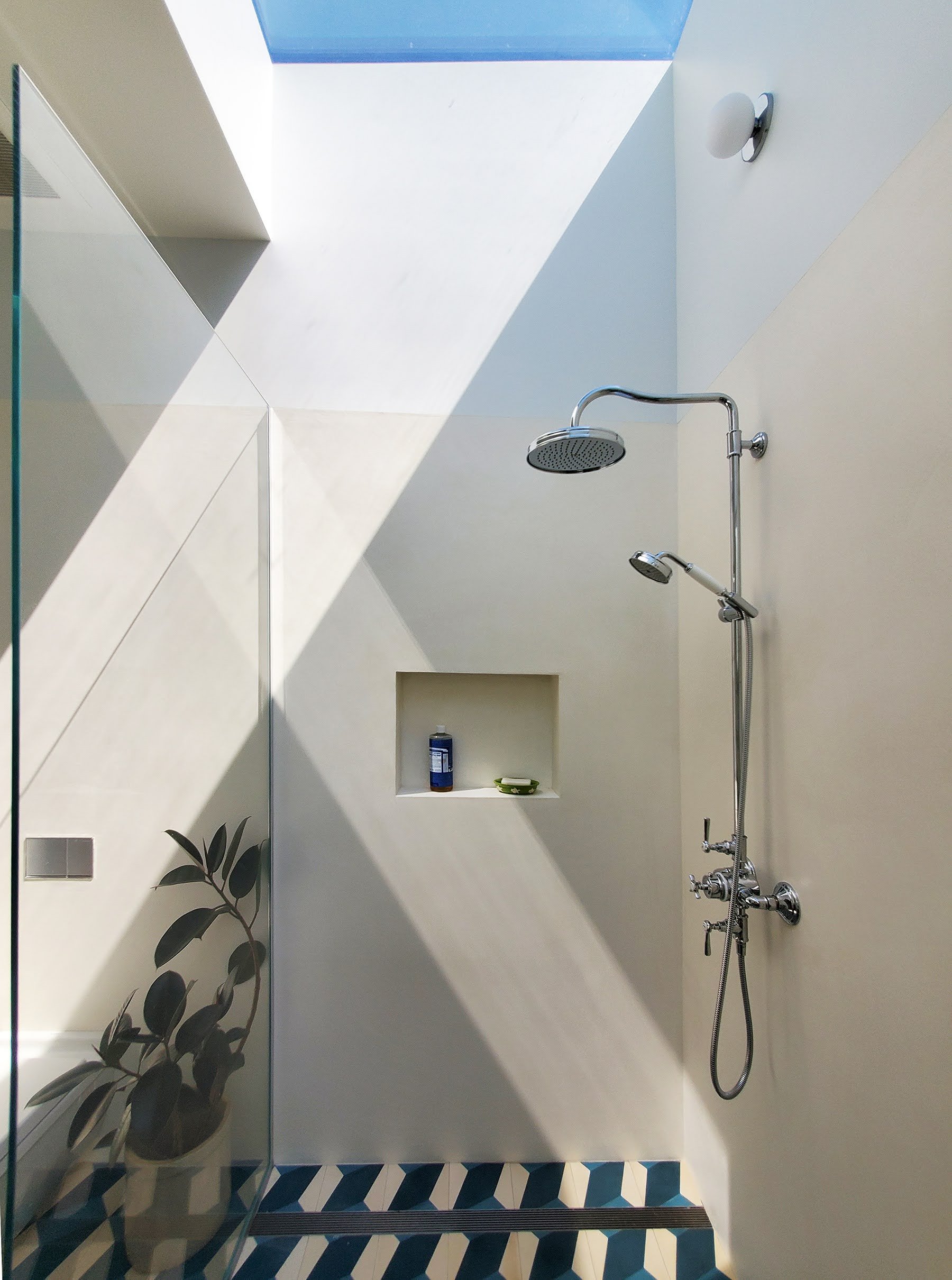
The bathroom walls are finished with Tadelakt, a natural lime-based, waterproof plaster.
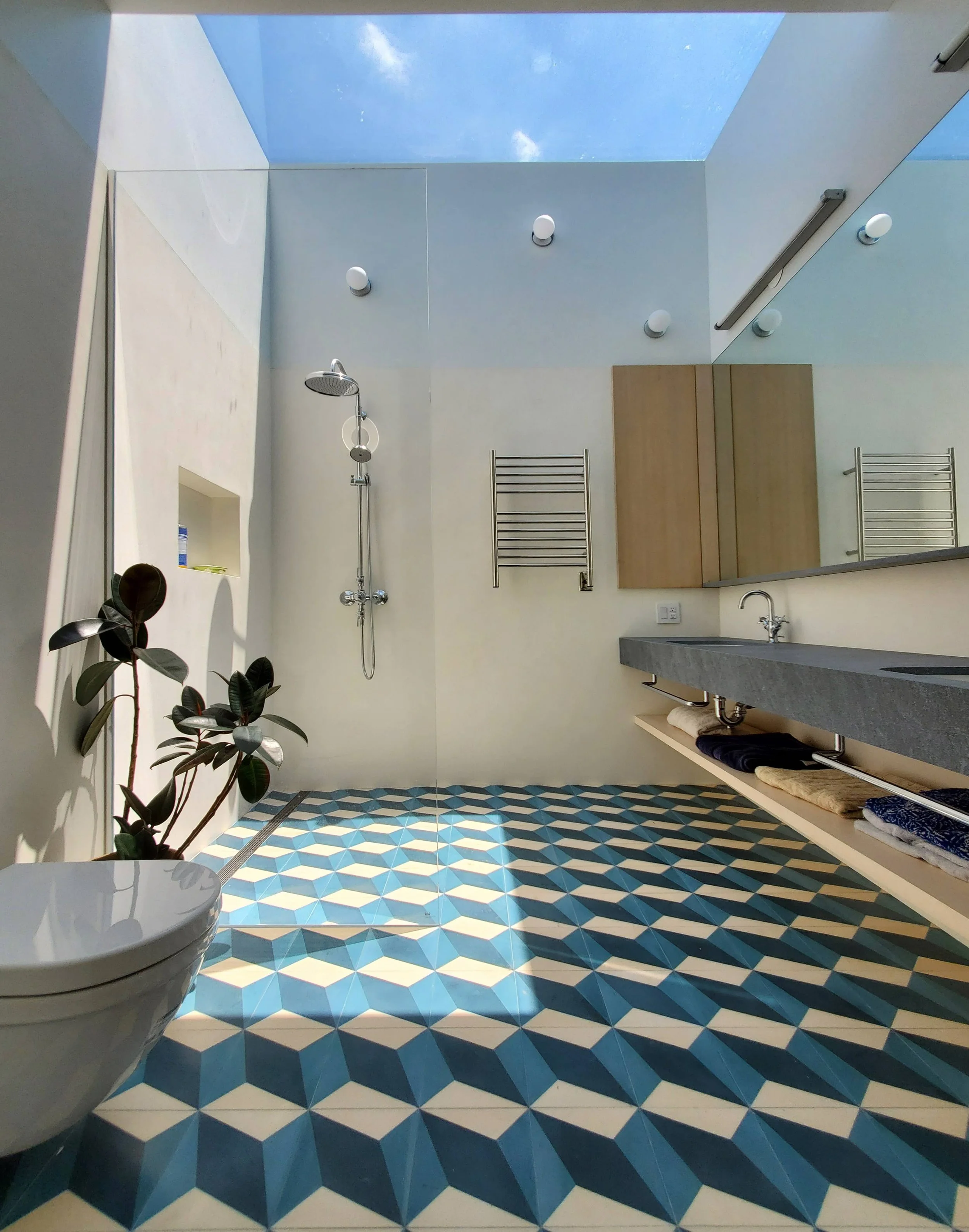
The bathroom features a wall-to-wall skylight that naturally illuminates to the space.
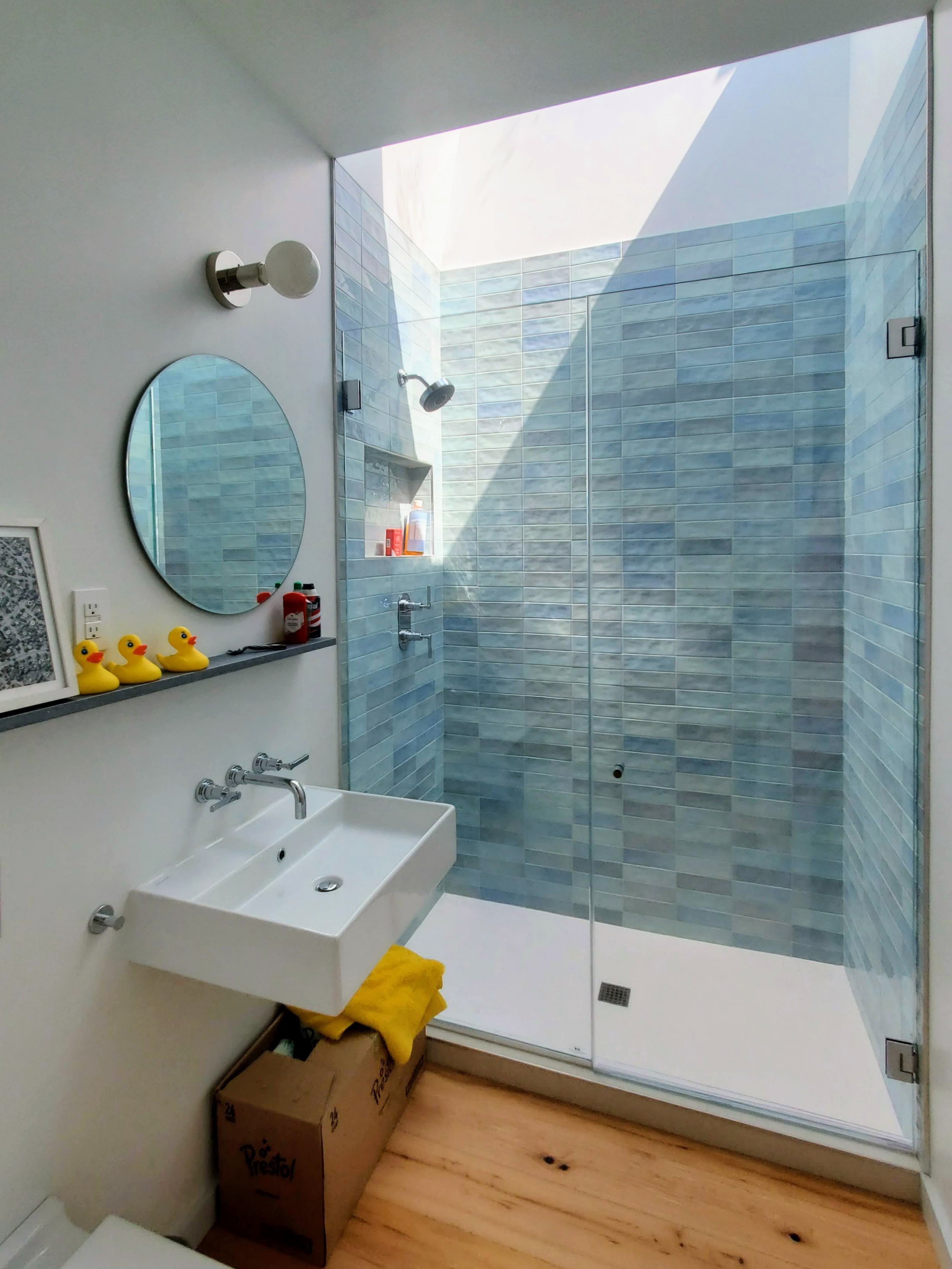
A wall-to-wall skylight above the shower in the guest bathroom opens the space to the sky above.
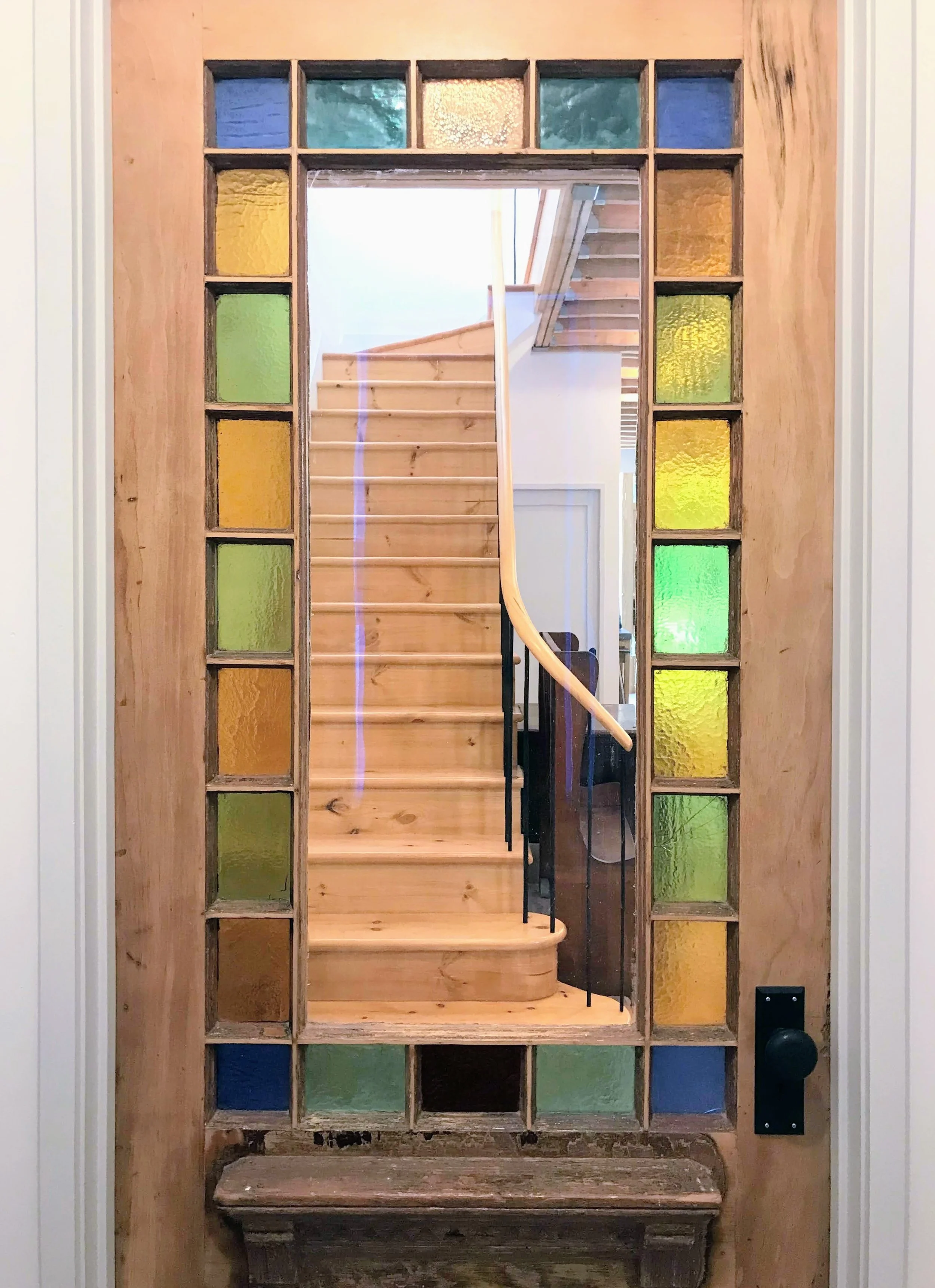
The vestibule door is one of many original elements that was carefully restored.
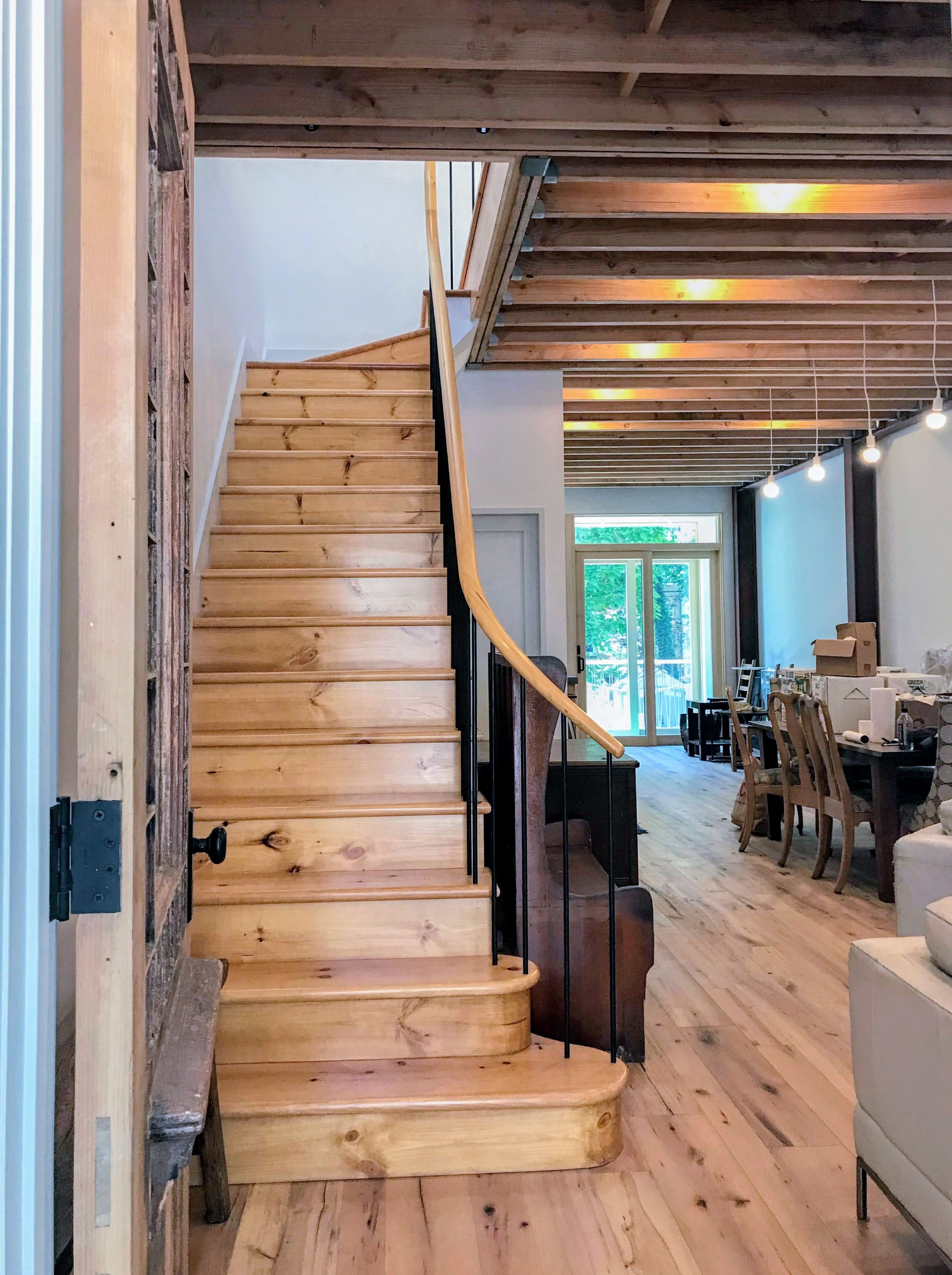
The house is heated through radiant heat floors. By heating surfaces rather than air, radiant heat systems can be more energy-efficient.
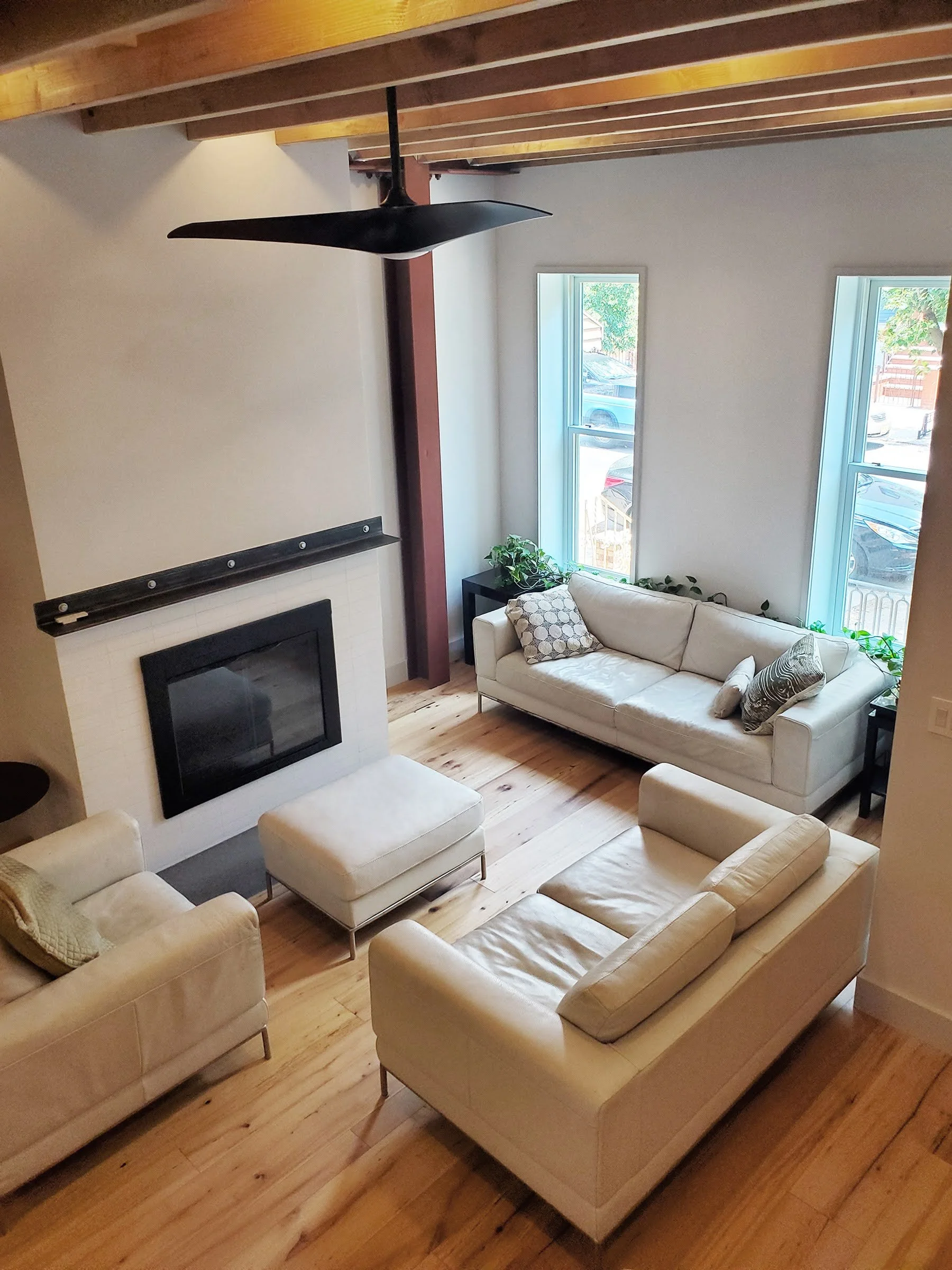
Ceiling fans were installed at key locations to efficiently circulate air, lowering energy costs and improving air quality.
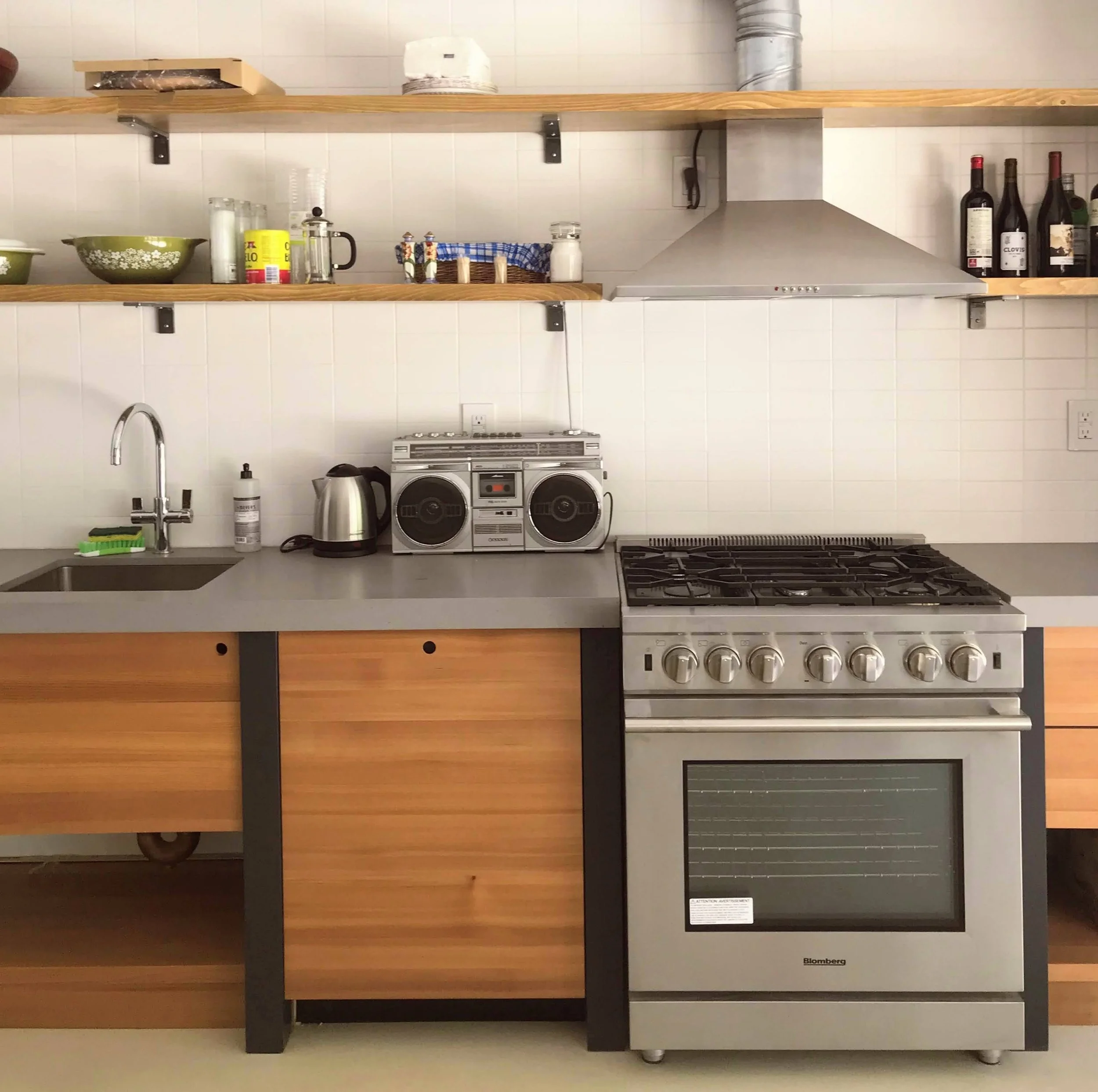
The cabinets at the lower floor kitchenette are also made with reclaimed wood from the original beams. The countertop features a seamless ceramic slab.
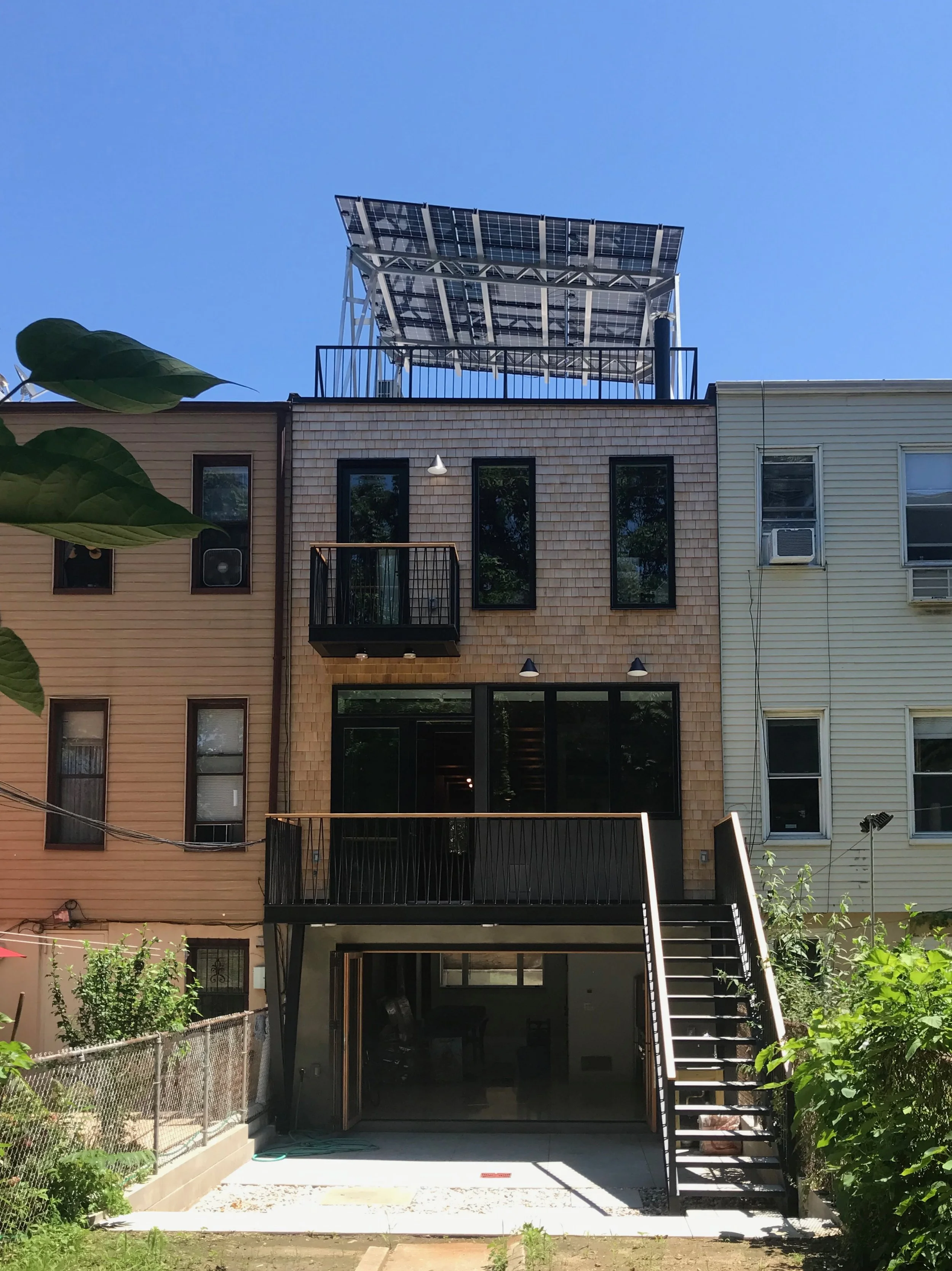
The back facade embraces a contemporary design. The solar panel canopy on the roof provides renewable electricity.
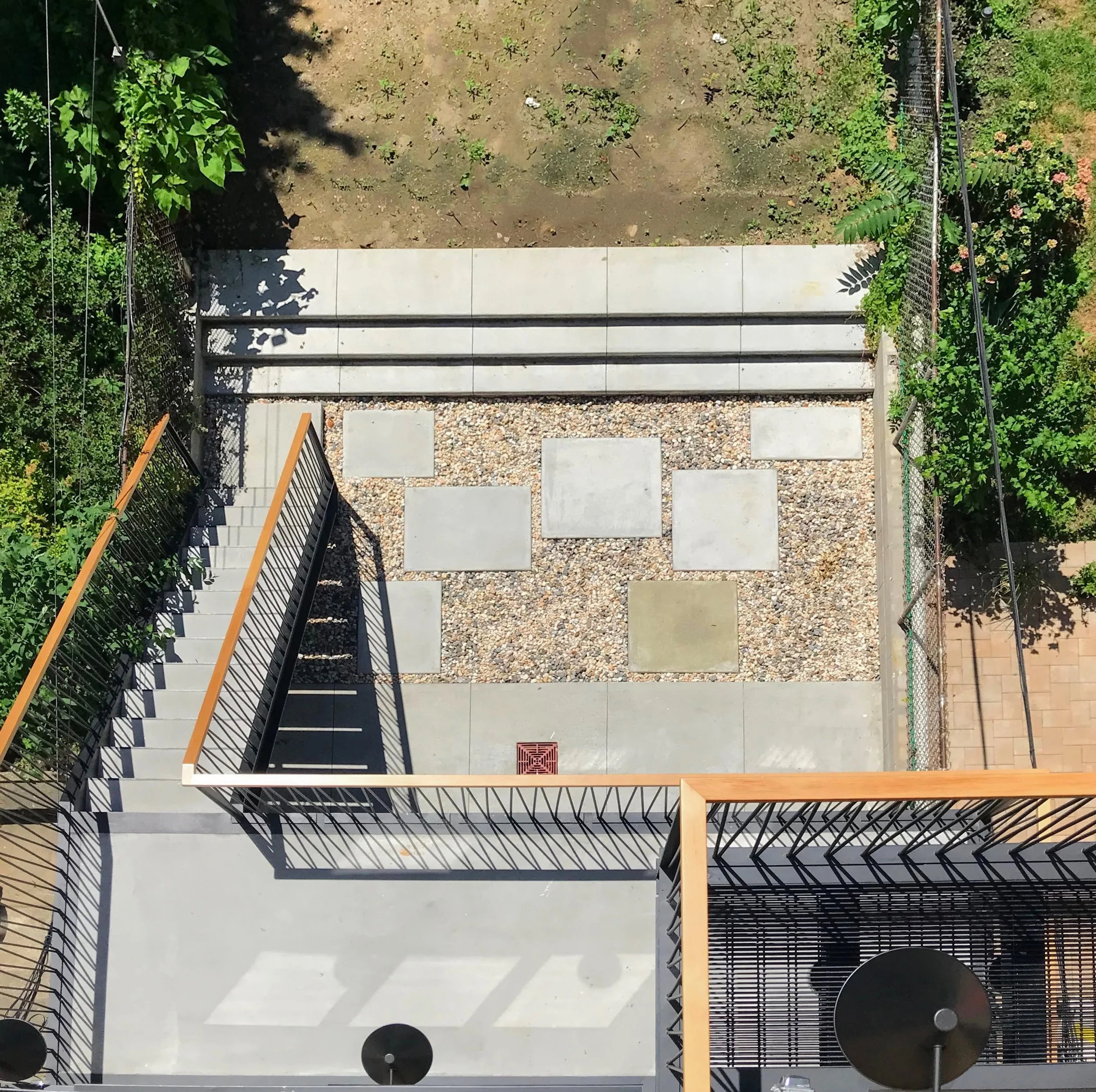
In the backyard, a gravel basin was engineered to naturally retain and slowly dissipate rainwater in this flood-prone zone.
The front facade was completely redesigned, paying homage to the original early 20th-century design.
New awning and windows were installed. Natural untreated cedar shingles were used both in the front and back facades.
The kitchen cabinets, island, and shelves were custom-built using wood reclaimed from the original ceiling beams that required replacement.
The backsplash consists of handmade terracotta tiles, known as Zellige tiles.
The kitchen cabinets, island, and shelves were custom-built using wood reclaimed from the original ceiling beams that required replacement.
The original kitchen sink was reglazed and reused.
The bathroom walls are finished with Tadelakt, a natural lime-based, waterproof plaster.
The bathroom features a wall-to-wall skylight that naturally illuminates to the space.
A wall-to-wall skylight above the shower in the guest bathroom opens the space to the sky above.
The vestibule door is one of many original elements that was carefully restored.
The house is heated through radiant heat floors. By heating surfaces rather than air, radiant heat systems can be more energy-efficient.
Ceiling fans were installed at key locations to efficiently circulate air, lowering energy costs and improving air quality.
The back facade embraces a contemporary design. The solar panel canopy on the roof provides renewable electricity.
In the backyard, a gravel basin was engineered to naturally retain and slowly dissipate rainwater in this flood-prone zone.
The cabinets at the lower floor kitchenette are also made with reclaimed wood from the original beams. The countertop features a seamless ceramic slab.
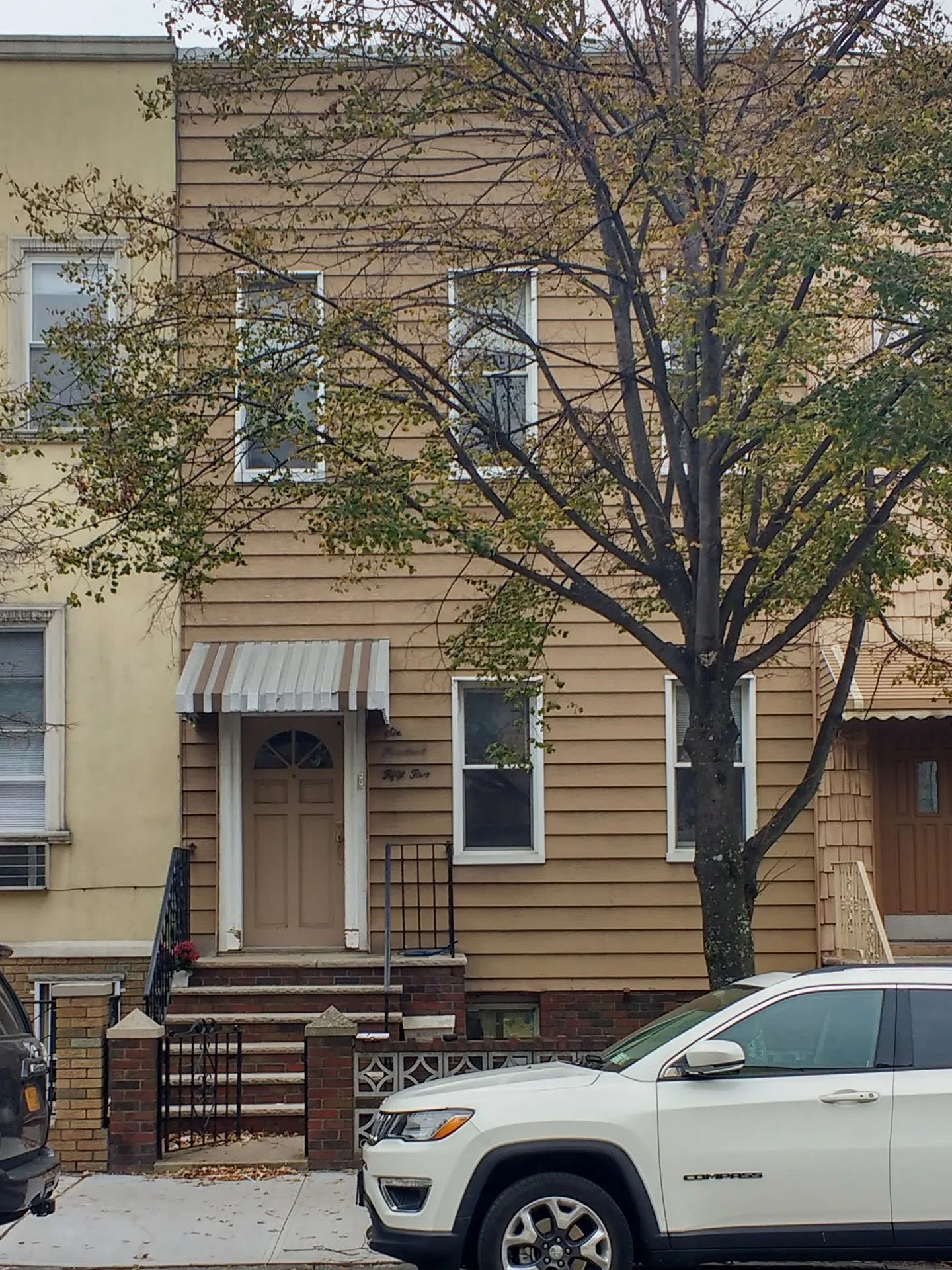
Front facade - Before
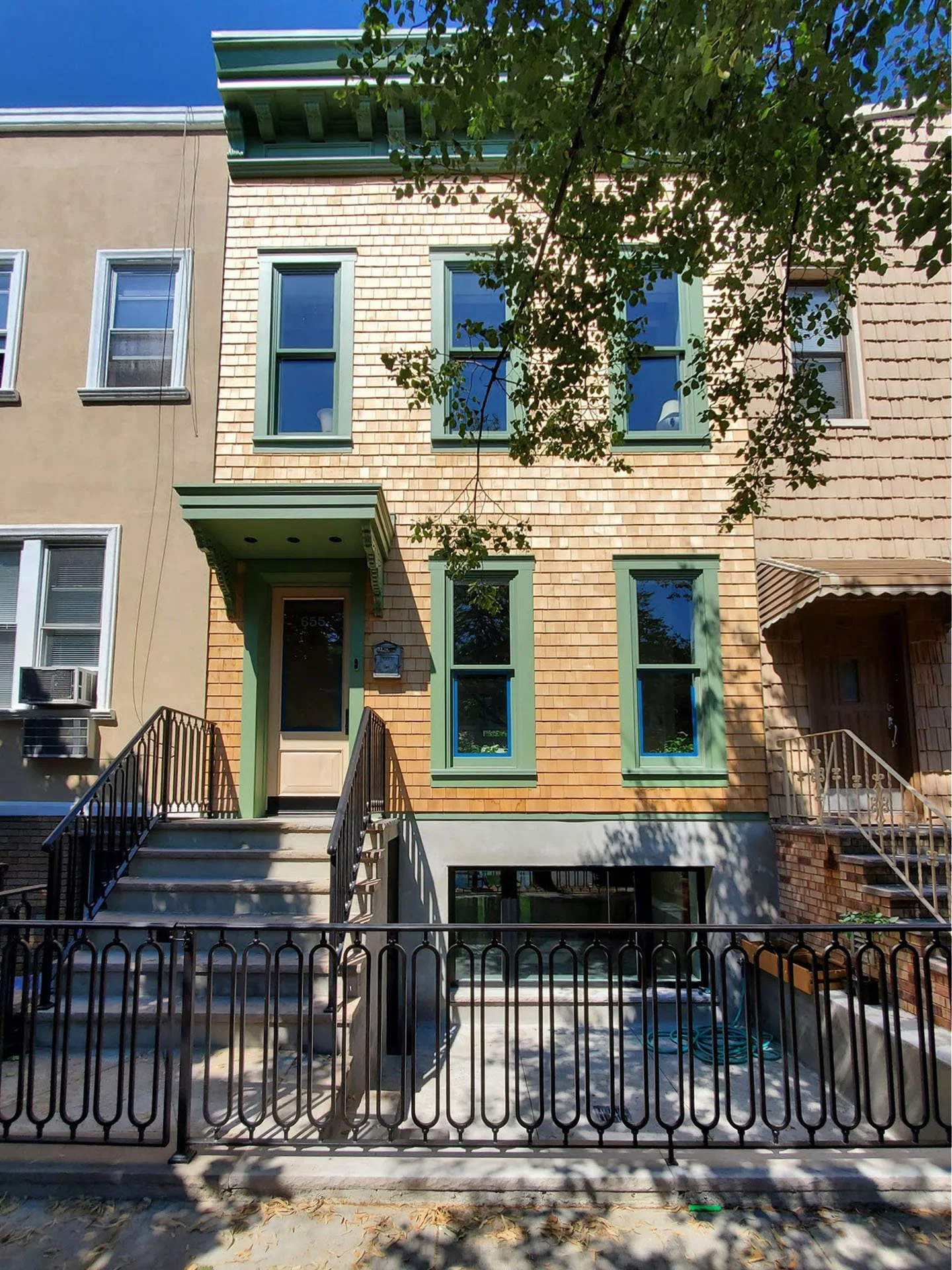
Front facade - After
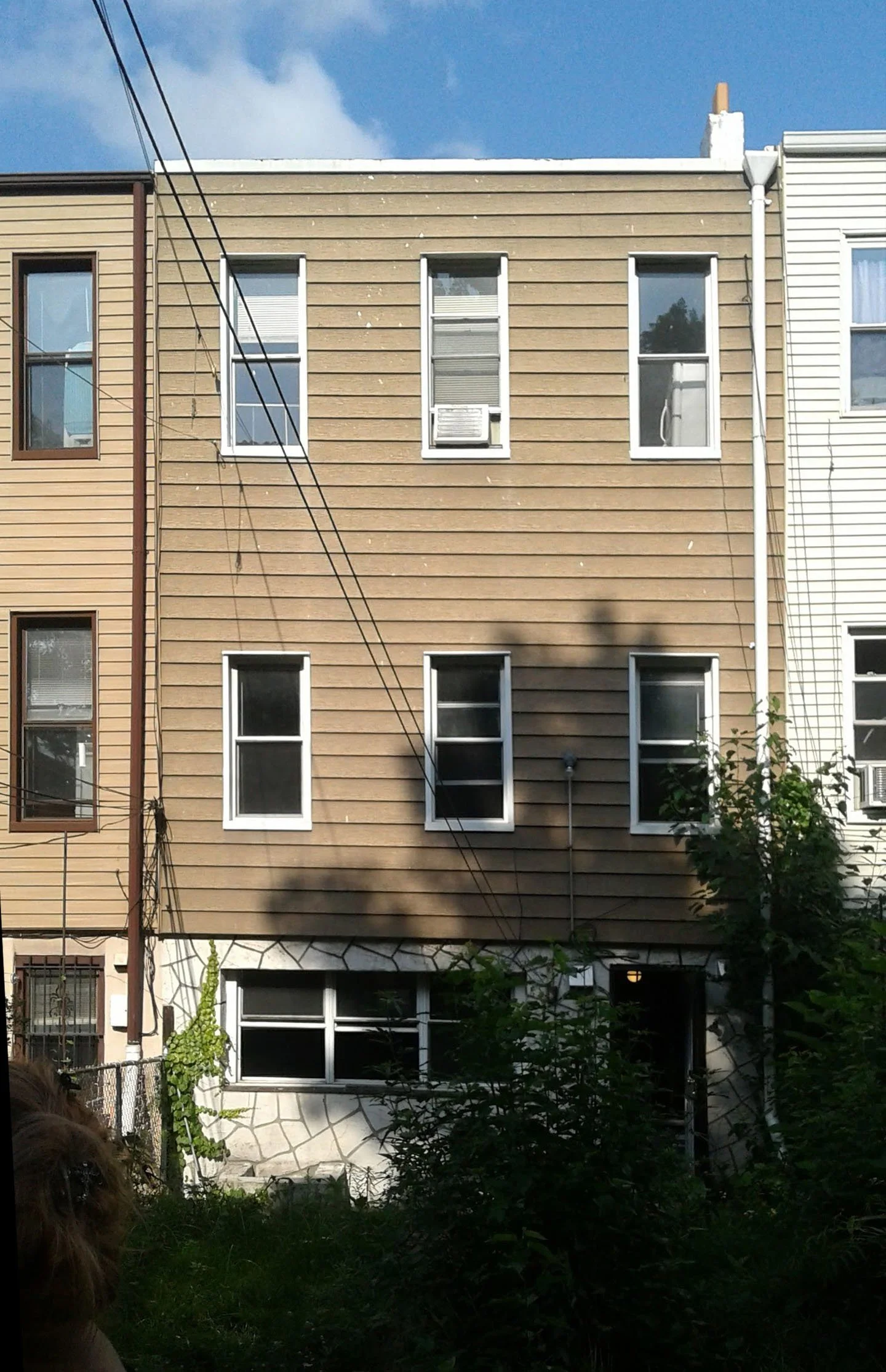
Back facade - Before
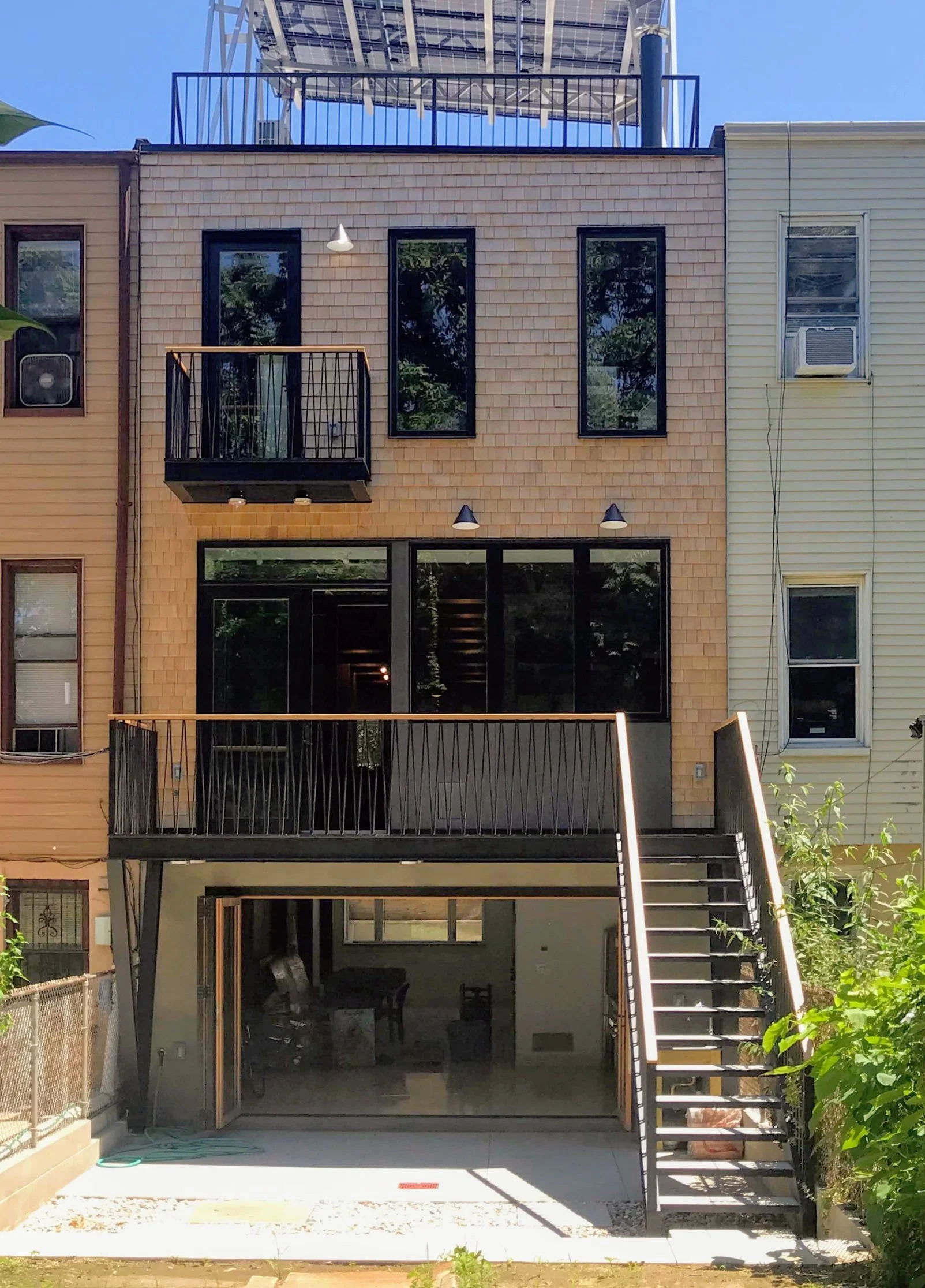
Back facade - After
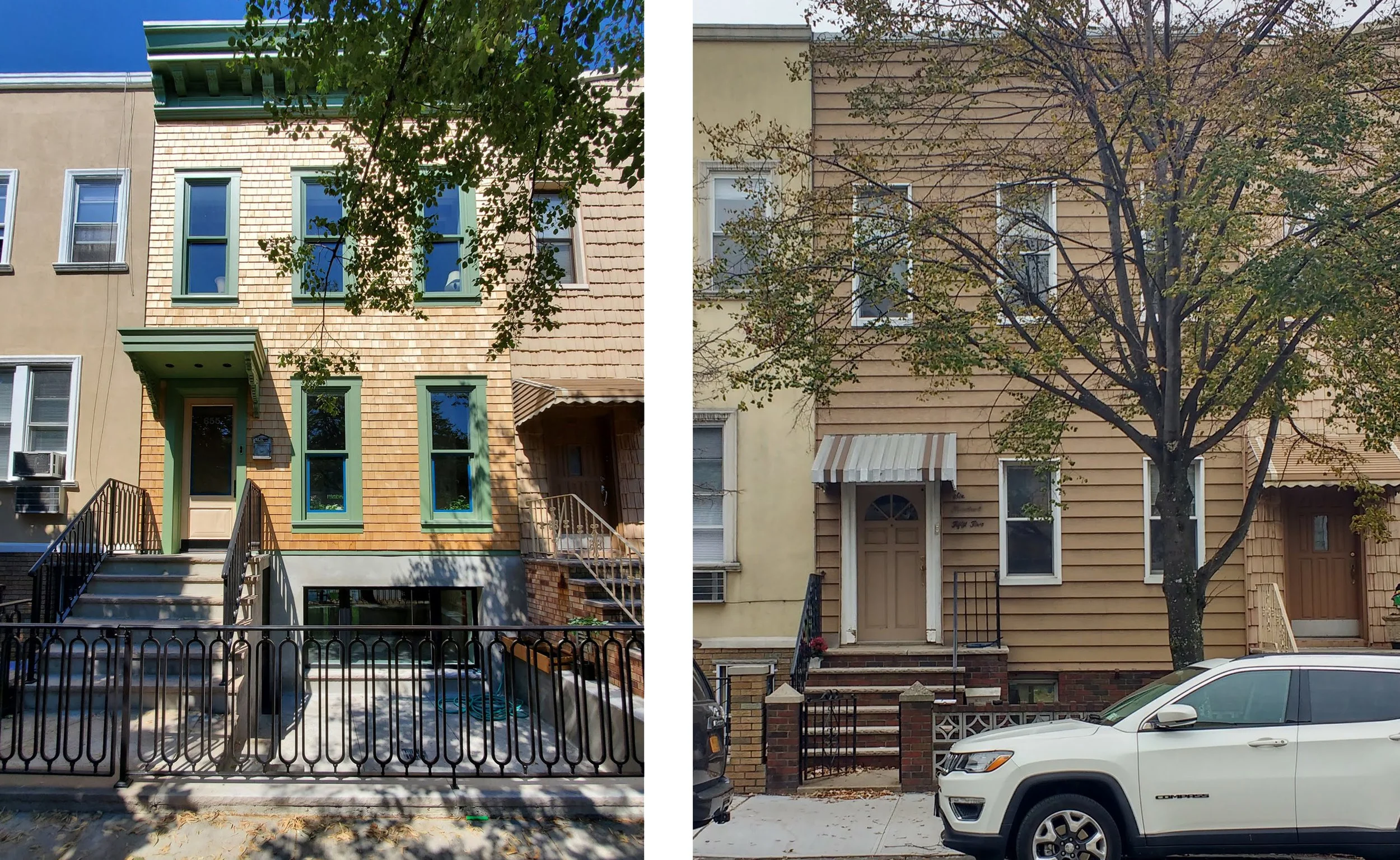
Before and After- Front facade
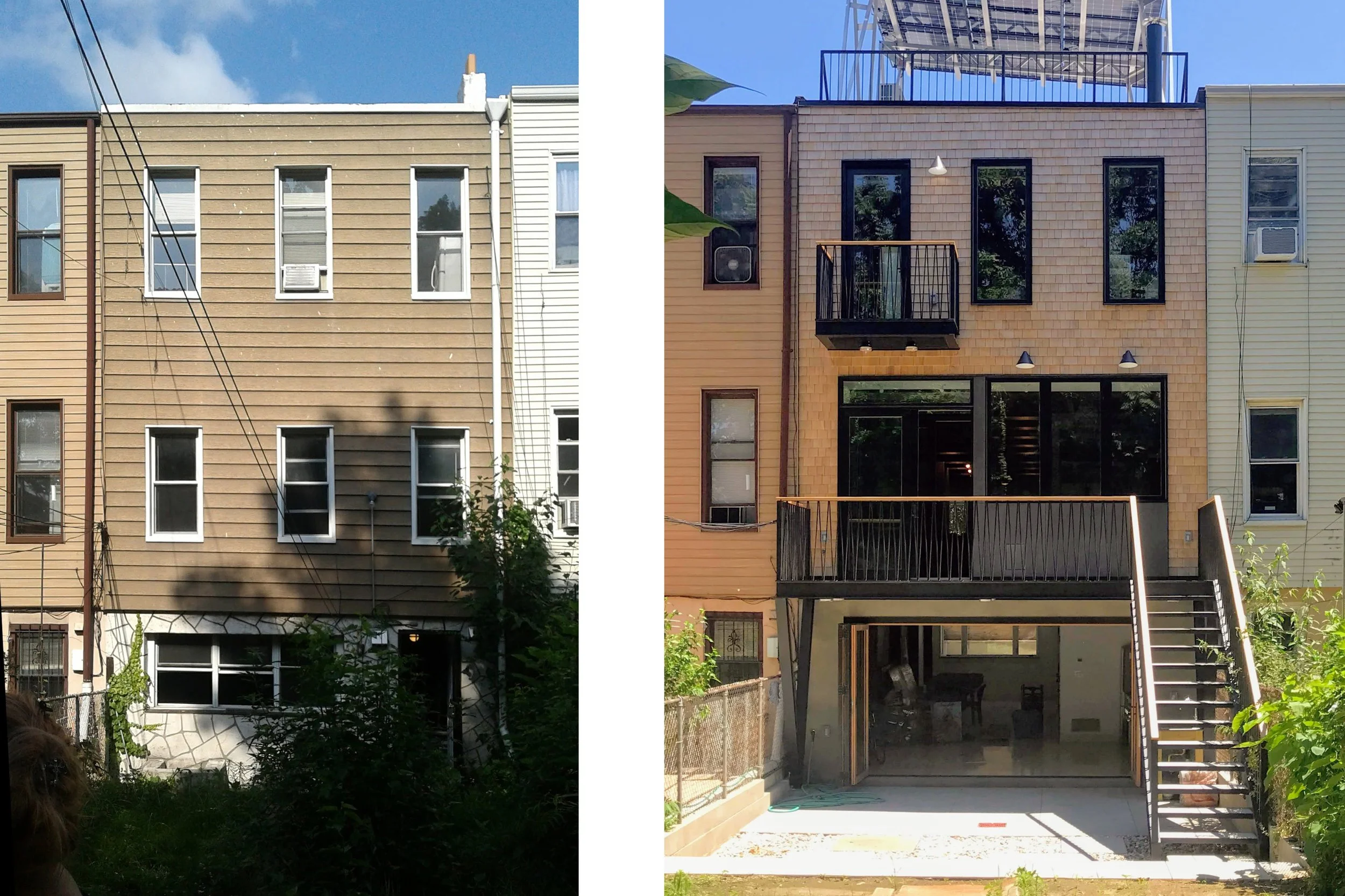
Before and After- Back facade